When your Snyk contract renewal lands with another price increase, and your AppSec backlog is full of noise your team doesn't trust, assessing alternatives to Snyk becomes a strategic priority. Three problems drive that decision: per-contributor pricing that scales faster than headcount, alert fatigue from scanners that flag everything without context, and coverage gaps that show up right when you need a signal the most. The tools below are assessed on scan performance, false-positive reduction, business-logic detection, and actionable contextual findings.
TLDR:
- Snyk's per-contributor pricing and high false positive rates drive AppSec teams to consider alternatives
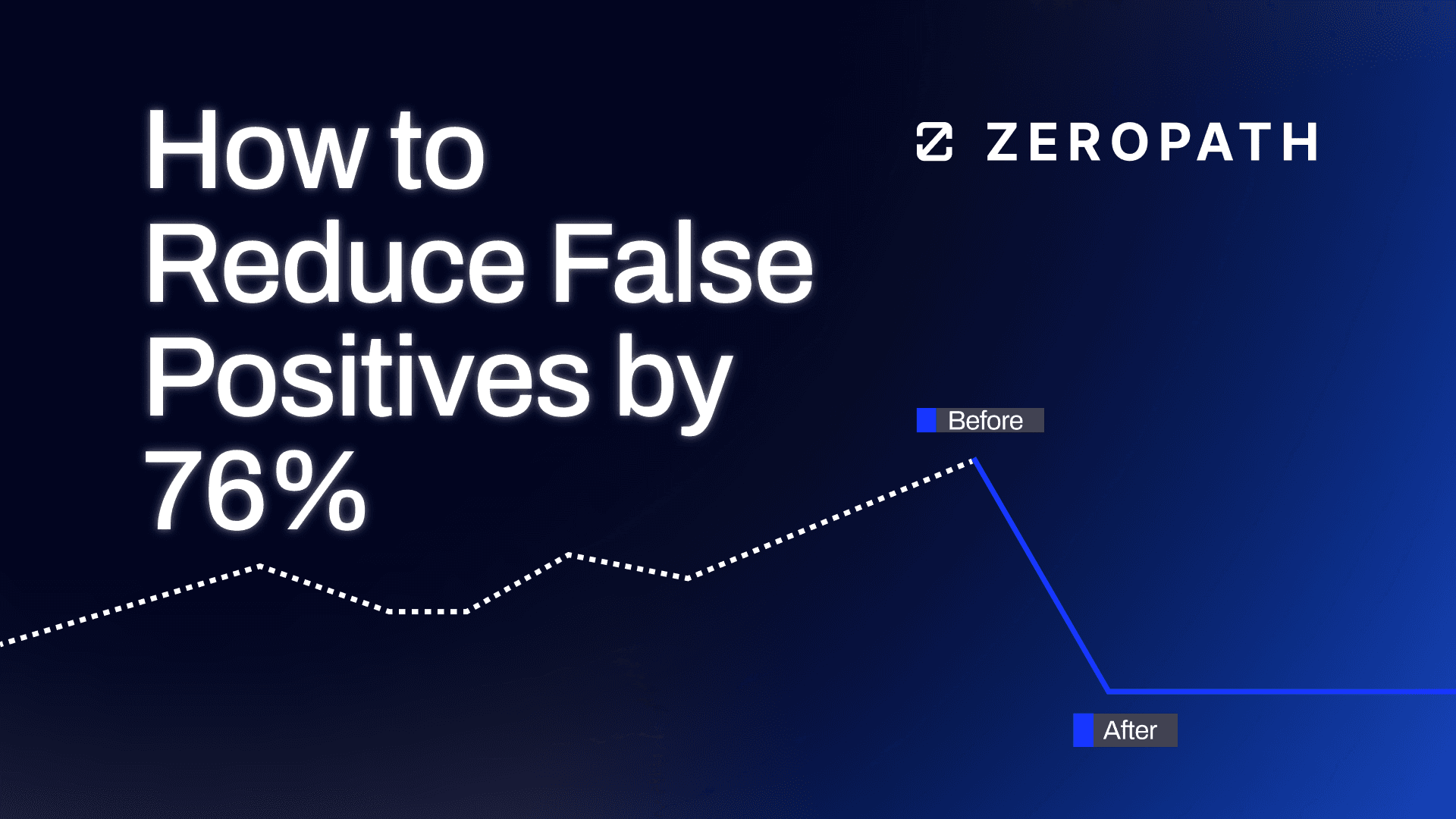
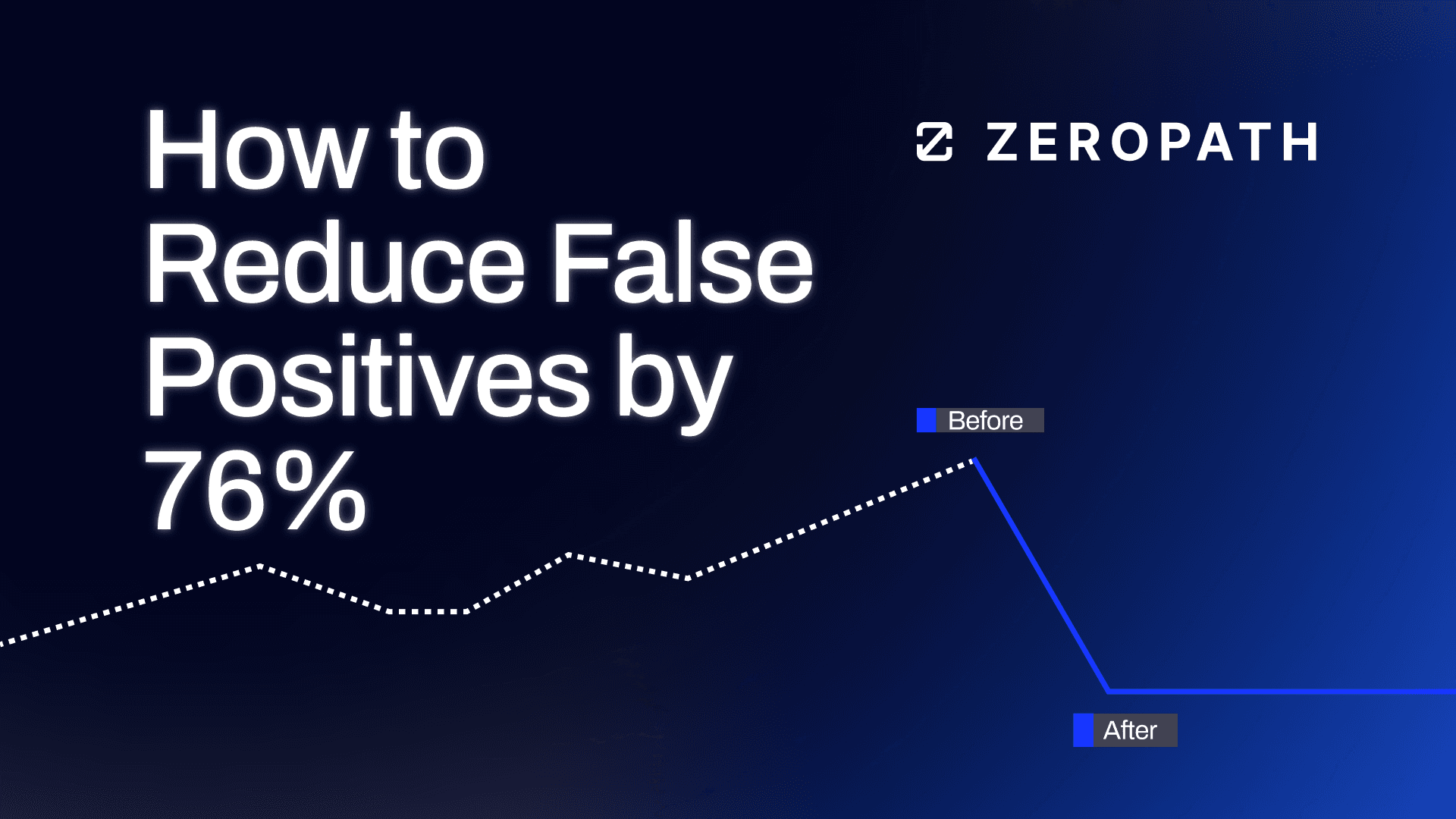
- ZeroPath uses AI reasoning to catch business logic flaws that pattern-matching tools miss with 75% fewer false positives
- Traditional SAST tools (Checkmarx, Veracode) lack AI-generated code coverage and context-aware analysis
- PR scan speed varies wildly: ZeroPath typically under 1 minute vs Checkmarx 25-45 minutes for the same codebase
- ZeroPath combines SAST, SCA, secrets, and IaC scanning at $60/dev/month with automatic fix generation
What is Snyk and How Does It Work?
Snyk is a developer security tool built around four scanning engines: Snyk Code (SAST), Snyk Open Source (SCA), Snyk Container, and Snyk IaC. The SAST engine traces back to DeepCode, acquired in 2020: pattern-heavy, fast, not particularly deep. It connects with GitHub, GitLab, Bitbucket, and Azure DevOps through IDE plugins and PR checks, and its SCA engine tracks open-source package dependencies.
Snyk's developer workflow integration is quick to configure. Teams with a GitHub or GitLab connection typically have it running within a single afternoon. The vulnerability database is solid, with exploit-maturity ratings that speed up triage and SCA reachability analysis that flags whether a vulnerable dependency is actually called in your code. Newer AI SAST tools have had to earn ground against that foundation. The noise problem is in the SAST engine, which flags broadly against known patterns without assessing exploitability in your specific codebase. And reachability covers dependencies, not static analysis.
Per-contributor pricing scales with headcount, not with the amount of security-sensitive code your team ships. So, costs grow quickly beyond 200+ contributors. The SAST engine handles known vulnerability patterns well but struggles with business-logic flaws that require reasoning across multiple files. Container scanning sits in a separate product with its own licensing, so full-stack coverage can cost more than the base plan suggests, a detail that tends to surface at renewal. IaC scanning is included across all current Snyk plans. Teams without dedicated AppSec resources often spend more time triaging noise than fixing real issues.
Why Consider Snyk Alternatives?
Start with the bill. Snyk's per-contributor pricing ties cost to headcount, not to the amount of security-sensitive code your team ships. With 200+ contributors, you're paying for every committer even when only a fraction touch code paths that carry real risk. The bill scales every time you hire, not every time your attack surface grows.
High alert volume from scanners that flag broadly without assessing exploitability forces engineers to confirm whether findings are real before acting. Once they start reflexively marking things as false positives, trust is gone. And real vulnerabilities sit in the backlog alongside noise.
As AI-generated code has become common, models produce non-standard control flows and novel authentication patterns that sit outside the signature libraries that pattern-matching tools are trained on. The scanner sees nothing to flag, so the exposure ships quietly. The same gap shows up in IaC-heavy stacks and language ecosystems where Snyk's rule coverage is thinner than the marketing suggests. Each problem has a different root cause, which is why the fix is rarely a configuration change.
ZeroPath - Best Snyk Alternative
ZeroPath is an AI-native application security scanner built to catch what pattern-matching tools miss. It runs SAST, SCA, secrets detection, and IaC scanning through a single reasoning engine at $60 per developer per month, with no separate products or licensing surprises when your stack grows.
Where Snyk relies on curated pattern libraries trained on known vulnerability signatures, ZeroPath's AI agent traces data flows across files, understands authentication boundaries, and catches business logic flaws that signature-based tools miss entirely. Per ZeroPath's benchmarking, that reasoning produces over 75% fewer false positives compared to pattern-based tools, PR scans that typically finish in under one minute, and auto-generated fixes delivered directly in the pull request, so developers can act without leaving their workflow.
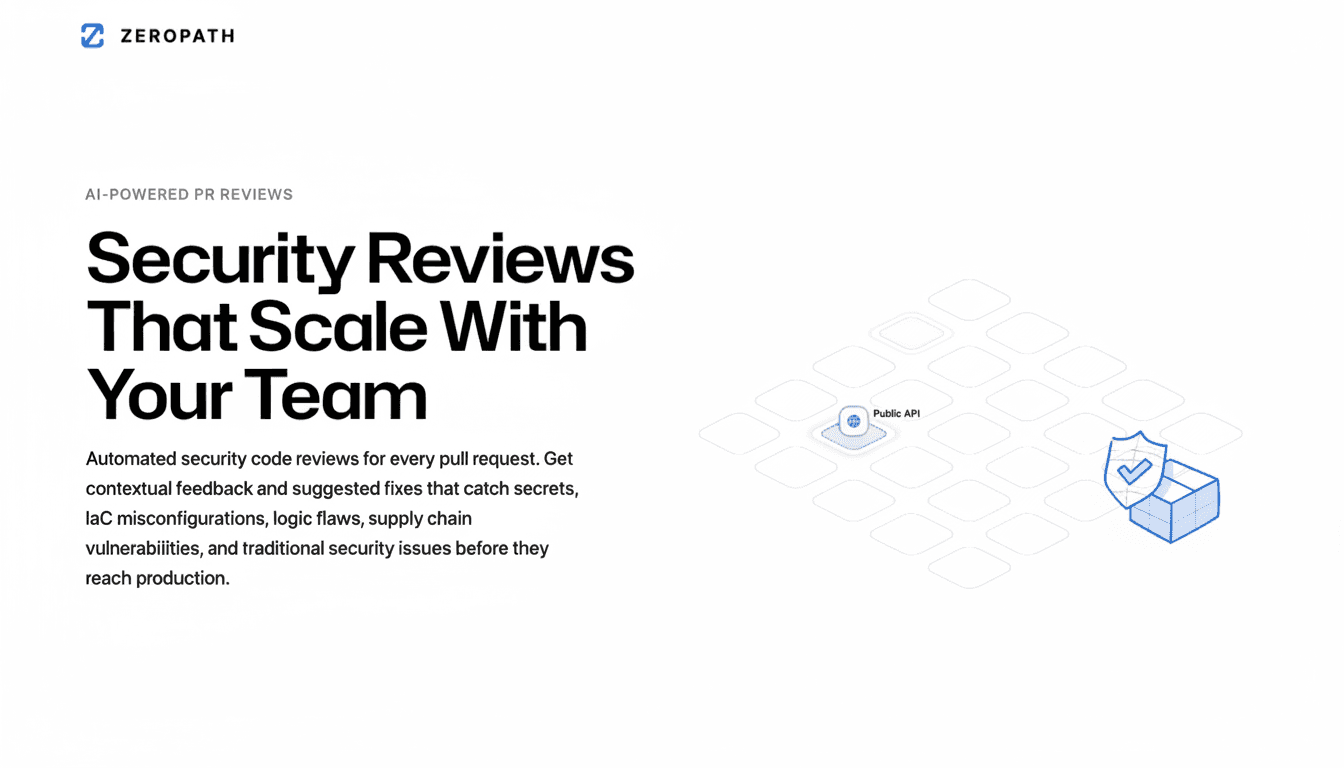
Zeropath also provides automated security code reviews on every pull request before code reaches production.
Most teams run more than one language, and reconfiguring a scanner every time the stack changes is the kind of friction that can quietly degrade coverage. ZeroPath covers 15+ languages, including Python, JavaScript, TypeScript, Go, Java, Ruby, Rust, PHP, C/C++, C#, Kotlin, and more, across polyglot codebases without requiring per-language setup. It connects to GitHub, GitLab, and Bitbucket out of the box and ships in both cloud-hosted and self-hosted modes for teams in compliance-heavy industries where code stays on-premises. Findings appear in pull requests with fixes attached, so developers work in the same context in which they wrote the code, not in a separate security dashboard.
- Scans repositories continuously with an agentic AI engine instead of running point-in-time scans
- Generates a fix automatically with each finding
- Includes root cause analysis in every alert
Checkmarx
Checkmarx runs SAST, SCA, DAST, and IaC scanning across 30+ languages, with CxQL providing a query language for writing custom detection rules. It connects to major CI/CD pipelines and SCMs and produces compliance reports aligned with frameworks like SOC 2, PCI DSS, and HIPAA.
It fits enterprise environments where audit trails, compliance documentation, and multi-scanner consolidation matter more than scan speed. Large AppSec teams with dedicated resources tend to get the most from it, particularly in compliance-heavy industries where a vendor-backed security report carries weight with auditors.
The scanner catches known vulnerability patterns but lacks the capability to reason about business-logic flaws or multi-file data flows. Pricing is custom and never publicly listed. Per Vendr market data, the median annual contract runs around $56,000, with enterprise deployments ranging from $110,000 to $250,000+, depending on module selection, developer count, and support tier. Multi-year commitments can push 20-40% below list price, so the quote you receive is rarely the floor.
Veracode
Veracode runs SAST, DAST, and SCA in a managed cloud model, with binary scanning as its default static analysis approach. Teams can scan compiled artifacts without sharing raw source code. It connects to IDEs, CI/CD pipelines, and ticketing systems.
The managed model suits teams that want scanning results without owning the infrastructure behind them. Binary scanning holds up well for compiled languages like Java and .NET, and the hosted setup means less configuration work for AppSec teams already stretched thin. That said, the binary scanning model also means you're one step removed from the source, which is fine until you need to understand exactly where in the codebase a finding originates.
Auto-fix is available through Veracode Fix, which covers over 70% of detected flaws across 10 supported languages and was expanded to SCA remediation in early 2026, though it requires separate licensing. The scanner has no business logic detection. Pricing is application-based: Veracode licenses by application profile instead of headcount, with costs scaling from five figures for small deployments to $500,000+ for large enterprise portfolios, per Vendr market data.
Semgrep
Semgrep is an open-source static analysis engine with a YAML-based rule syntax that security engineers can write and maintain themselves. It covers 30+ languages and runs in cloud-managed or self-hosted modes. A large public registry of community-written rules provides teams with a starting point without having to build from scratch.
The appeal is control. Rules are written in YAML, so what gets flagged is explicit and auditable. Scan speeds are fast, and CI/CD integration is straightforward. The catch is that control comes with overhead; someone has to write and maintain the rules, and coverage is only as good as the rules that your team builds.
Pattern matching is the ceiling. Semgrep cannot reason about business logic flaws or trace data flows across file boundaries. Secrets scanning and SCA are paid-tier only. Auto-fix is available in paid tiers via AI-assisted autofix, but coverage is limited and tied to the Multimodal AI feature set. False positive reduction requires the same paid Multimodal AI feature, which, per its published benchmarks, reduces findings by an average of 60% across 3,500+ customers, but the underlying rule engine still fires on everything first. The AI SAST capabilities needed to catch novel vulnerabilities in AI-generated code are not part of what Semgrep offers.
SonarQube
SonarQube tracks code quality and security in a single interface, running AST pattern matching in the free Community Edition, dataflow bug detection in the Developer Edition, and taint analysis for source-to-sink tracking at the Enterprise level. The tool flags duplication, test coverage gaps, technical debt, and security vulnerabilities. An AI CodeFix feature generates remediation suggestions for issues detected by the rule engine.
Quality gates are where SonarQube earns its place. Teams can block pull request merges when coverage drops below a threshold, bug counts rise, or debt ratios exceed tolerance. For organizations where code quality enforcement is the primary goal and security is a secondary check, that gate mechanism is useful. The honest read is that SonarQube is a code quality tool that does some security, not an AppSec tool that also tracks quality. That distinction matters when your threat model is anything beyond the obvious.
In the Community Edition, scans run sequentially. Simultaneous PR activity across branches backs up in a queue, making it impractical for active PR workflows. G2 reviewers flag slow analysis on large projects, false positives that add triage overhead, and key features locked behind expensive enterprise tiers. For context, ZeroPath found 170 valid bugs in curl that tools like SonarQube missed. Full taint analysis and PR decoration are available only in paid tiers. The Team plan starts at $32 per month, priced by lines of code analyzed, not by seat or developer count, which can work in favor of smaller teams. Enterprise pricing is contact-sales with nothing published. The free Community Build processes one analysis at a time with no branch analysis.
Feature Comparison: Snyk vs Top Alternatives
Capability | Snyk | ZeroPath | Checkmarx | Veracode | Semgrep | SonarQube |
|---|---|---|---|---|---|---|
Business logic detection | No | Yes | No | No | No | No |
PR scan speed | Under 5 min | Under 1 min | 25-45 min | 10+ min | Under 5 min | 5-15 min |
False positive reduction | Standard | 75% fewer | High (reported) | Inconsistent | 60% (paid, Multimodal) | Rule-based |
Auto fix generation | Limited | Yes | Yes | Yes (Veracode Fix) | Limited (paid) | Paid only |
Custom rule support | Limited | Natural language | CxQL | Limited | Yes | Enterprise |
SCA with reachability | Java, JS, Python | All languages | Yes | Yes | Paid tier | Add-on only |
Secrets scanning | Yes | Yes | Yes | Yes | Paid tier | Yes |
IaC scanning | Included | Included | Yes | Yes | Yes | Yes |
Pricing transparency | Tier-based | $60/dev/mo | Custom quotes | $50K-$500K+/yr (app-based) | Free + paid | Free + Team from $32/mo (LOC-based); Enterprise contact sales |
Deployment | Cloud | Cloud + self-hosted | Cloud/on-prem/hybrid | Cloud | Cloud + self-hosted | Cloud + self-hosted |
Why ZeroPath is the Best Snyk Alternative
False positives are the most visible pain point, but not the only reason security teams move away from Snyk.
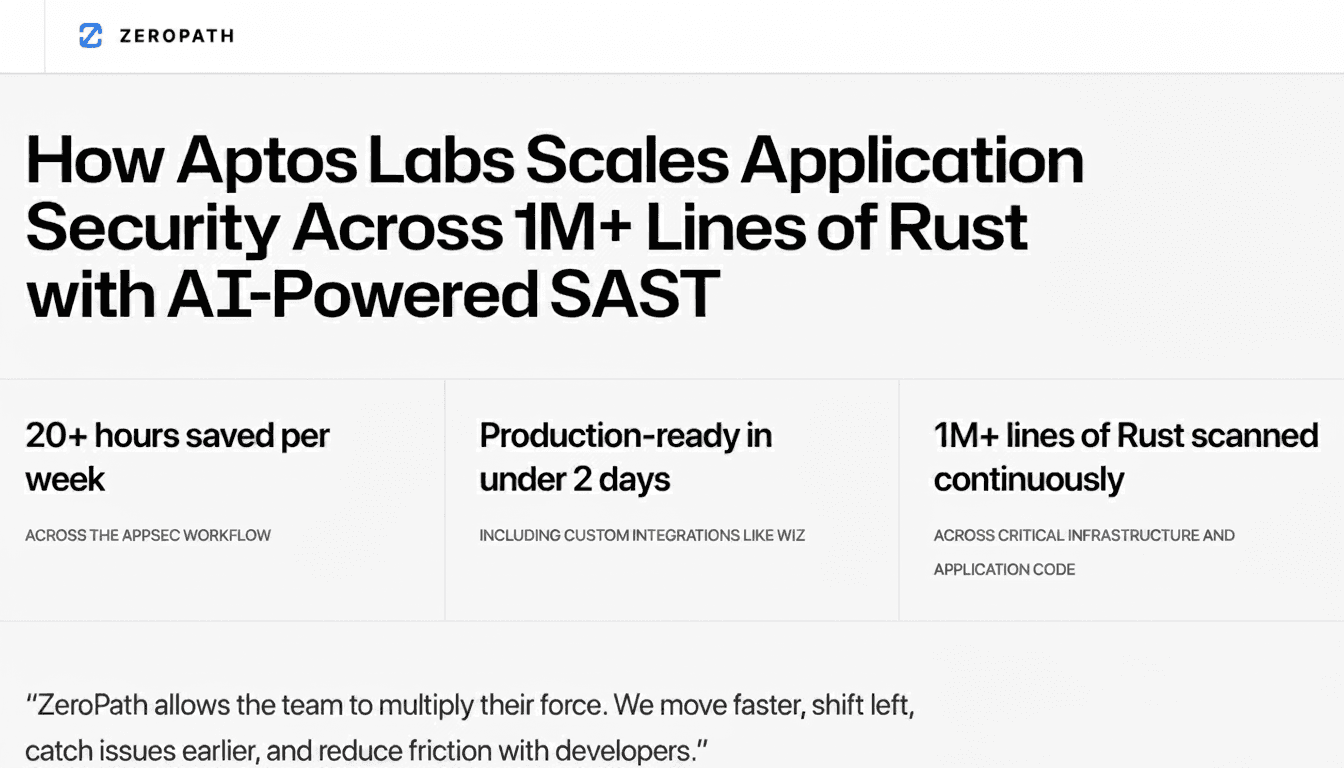
The deeper problem is detection coverage. Rule-based engines match patterns they have seen before. Business logic flaws like authorization bypasses, authentication gaps, and race conditions tied to how your application sequences operations do not have patterns to match. No curated rule set catches them because they are not a variation on a known signature; they are a product of how your specific codebase works. Aptos Labs is one example: ZeroPath caught a replay vulnerability that Semgrep, Checkmarx, and Snyk all missed.
That is where AI-native scanning produces findings that rule-based tools cannot. ZeroPath's reasoning engine traces data flows across files, maps authentication boundaries, and assesses business logic against what the code is intended to do, not against a list of known-bad patterns. The result, per ZeroPath's own benchmarking, is 75% fewer false positives and a class of true positives that pattern-matching tools miss entirely.
Speed matters independently. When a PR scan takes 25-45 minutes, engineers stop treating security as part of the review cycle and start treating it as a gate to bypass. ZeroPath's PR scans typically finish in under a minute, with auto-generated fix suggestions posted inline, so a developer can apply a patch without leaving the pull request.
Coverage scope is the third factor. Snyk requires separate products and licensing for IaC scanning. ZeroPath includes SAST, SCA, secrets detection, and IaC in a single plan at $60 per developer per month, with no module-by-module pricing surprises as the stack grows.
If your team has already written off scanners as noise generators, that gap is the reason to look again.
Final Thoughts on Picking a Snyk Alternative
Most teams start looking at Snyk alternatives when costs spike or alert fatigue sets in. The tools that actually solve those problems go beyond matching code against a pattern library; they trace data flows, assess authorization logic, and determine exploitability before surfacing a finding. ZeroPath catches business-logic vulnerabilities that rule-based engines miss, then hands your team a fix instead of a research project. Run a scan on your codebase to see what you've been missing.
FAQ
When should you consider moving away from Snyk?
The signal is spending 3+ hours per week sorting through noise to find real vulnerabilities, or when per-contributor pricing climbs past the point where the ROI calculation no longer makes sense. If your team flags Snyk findings as false positives at a rate that makes engineers distrust the alerts, you're past the threshold where an alternative makes financial and practical sense.
What features matter most when comparing Snyk alternatives?
Focus on false-positive rates first. Tools that reduce triage overhead by 50% or more change how your AppSec team spends its time. Then look at whether the scanner catches business-logic flaws and authentication gaps, alongside pattern-matching vulnerabilities. Finally, check whether fixes include context and patches instead of generic remediation advice, since that determines whether developers can act on findings immediately or need to escalate.
How do ZeroPath's AI scans differ from Snyk's machine learning approach?
Snyk runs semantic analysis trained on known vulnerability patterns, which works well for catching what has been cataloged before, but misses flaws that require understanding how your specific application behaves. ZeroPath's AI agent traces data flows across files, maps authentication and authorization boundaries, assesses business logic against what the code is intended to enforce, and generates fixes tied to the specific context of the finding, without relying on a curated rule set to first recognize the pattern.
Can you run ZeroPath alongside Snyk during a trial period?
Yes, and this is the right way to test whether the reduction in false positives and the coverage of business-logic vulnerabilities make switching worthwhile. Run both scanners on the same repositories for 2-3 weeks, then compare what each tool flags, how much triage time your team spends on each, and which findings surface issues the other missed. The reachability analysis and auto-fix quality become obvious under direct comparison.
What's the practical difference between rule-based and AI-native scanning for AppSec teams?
Rule-based scanners flag everything that matches known patterns, which means your team spends time confirming whether a finding is exploitable in your specific context. AI-native scanning determines exploitability during the scan itself, filtering out issues that can't reach vulnerable code paths based on how your application actually works. That's the distinction between triaging 500 alerts versus 50.