DryRunSecurity works well for what it's designed to do. The question most teams eventually run into is whether that scope is enough for where their program is headed. PR-level feedback has a ceiling: it only covers code that moves through an active pull request, in one of 14 supported languages, on GitHub or GitLab. When your stack runs Rust, your team uses Bitbucket, or your security program requires SCA, IaC, and SAST in one place, that ceiling becomes a blocker. This guide covers the alternatives worth assessing and where each one actually fits.
TLDR:
- DryRunSecurity's language coverage excludes Rust, Dart, Nim, and AL (Business Central), leaving gaps for polyglot stacks; VCS support stops at GitHub and GitLab, leaving Bitbucket and Azure DevOps teams unsupported
- DryRunSecurity has SCA (DeepScan), IaC scanning (Terraform, PR-focused), and inline auto-fix suggestions, but lacks automated PR creation for fixes and full repository scanning outside pull requests
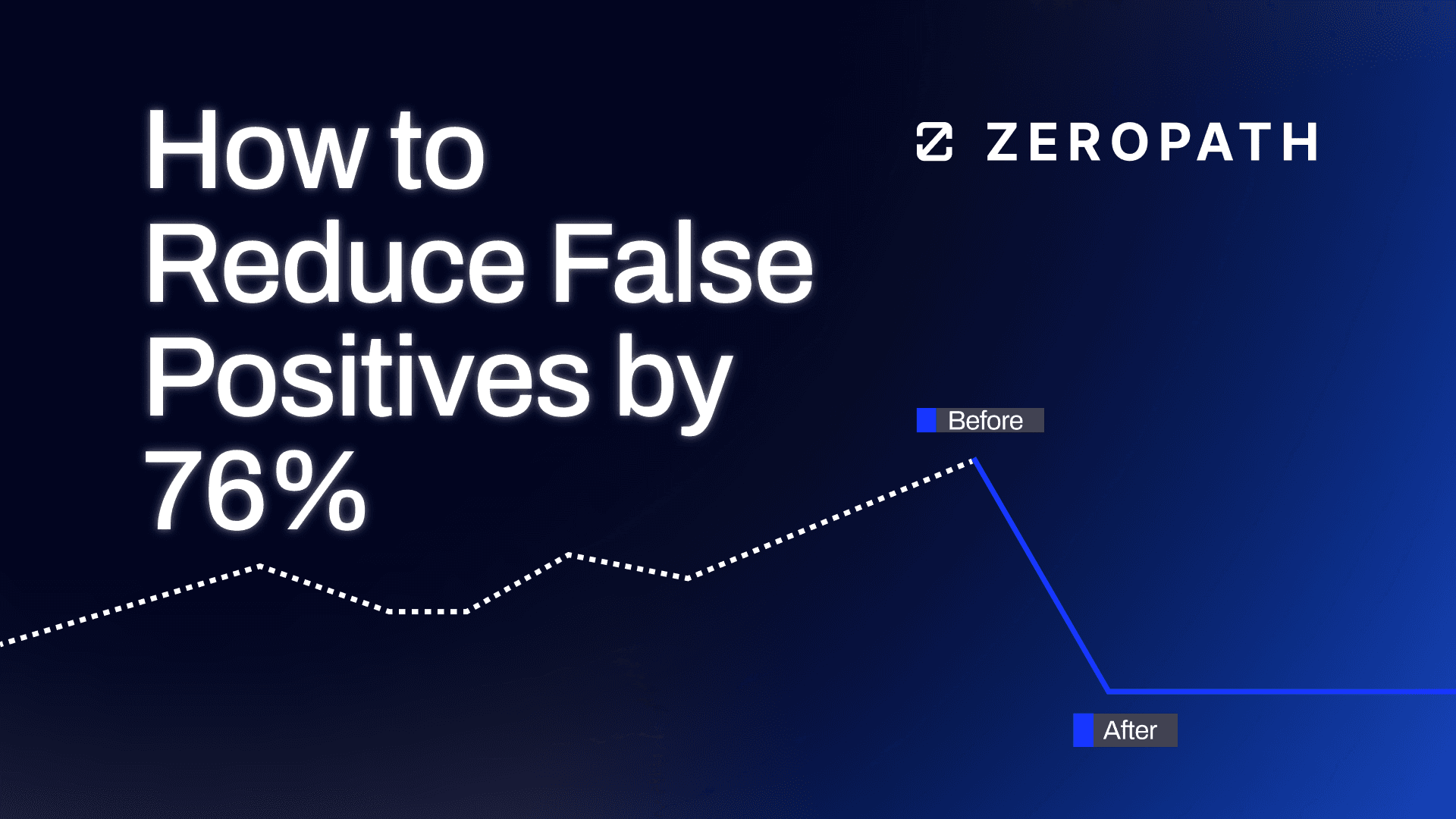
- ZeroPath cuts false positives by 75% and catches business logic flaws that pattern-matching tools miss entirely
- Alternatives range from $25/dev/month (Snyk) to enterprise pricing, but feature depth varies
- ZeroPath verifies vulnerabilities before surfacing them and auto-generates mergeable PRs, beyond mere explanations
What Is DryRunSecurity and How Does It Work?
DryRunSecurity is a code security tool built around Contextual Security Analysis (CSA), which reviews code changes as they happen within the development workflow and surfaces security feedback directly in GitHub and GitLab reviews. The focus is on pull requests. AI-generated security explanations attach directly to each PR, giving developers plain-language summaries of what changed and why it might matter from a security standpoint, without requiring a dedicated security engineer on every review.
The tool currently supports 14 languages: JavaScript, TypeScript, Python, Ruby, PHP, Go, Java, C#, C++, HTML, Elixir, Kotlin, Swift, and Scala. Its analysis covers authentication and authorization patterns, sensitive codepaths, sensitive functions, code authorship and intent, and code brittleness. These signals appear in PR comments without requiring developers to leave their existing tooling or context-switch to a separate security dashboard.
The company also offers Natural Language Code Policies (NLCP), which let teams write security rules in plain conversational language instead of complex rule syntax. The pitch is squarely aimed at GitHub-centric engineering teams that are security-understaffed and want lightweight, context-aware feedback baked into their existing review process, where developers may not have deep AppSec expertise but still need a meaningful security signal on every change.
Why Consider DryRunSecurity Alternatives?
DryRunSecurity fits a specific niche well. If you're GitHub-native, working in those 14 supported languages, and only need PR-level feedback, it can do the job.
But that niche has edges. Several constraints come up repeatedly when teams start assessing alternatives:
- VCS coverage stops at GitHub and GitLab, leaving Bitbucket, Azure DevOps, and multi-VCS environments unsupported.
- Language support excludes Rust, Dart, Nim, and other languages common in modern production stacks, limiting coverage for teams running anything outside the 14 supported languages.
- SCA is available via the DeepScan Agent, and IaC scanning covers Terraform in PR context, but there's no built-in secrets scanning, so you may still need a separate tool to cover that gap.
- Auto-fix generates inline suggestions for common vulnerability patterns, but automated PR creation for identified vulnerabilities is absent, which matters to DevOps teams.
- Compliance reporting covers SOC 2, ISO 27001, PCI DSS, and HIPAA, though the depth of coverage may vary compared to dedicated GRC tools.
- Full repository scans outside the PR context aren't supported.
None of this makes DryRunSecurity a bad tool. It makes it a narrow one.
DryRunSecurity carves out a niche in contextual security analysis, but teams reviewing their options in 2026 have more choices than ever. The decision comes down to VCS support, language coverage, SCA/IaC consolidation, false-positive tolerance, and whether AI-verified exploitability matters more than a self-maintained ruleset.
Untuned SAST tools produce 30-60% false positives, which explains why the alternatives here vary considerably in depth, price, and the areas they focus on. The right fit depends heavily on your existing stack and where your biggest exposure actually lives.
ZeroPath - Best DryRunSecurity Alternative
Most application security tools stop at the explanation layer: flag the pattern, describe the risk, and leave the rest to the team. ZeroPath is built around what happens after that: AI agents trace data flow across the entire codebase, confirm whether a vulnerability is actually exploitable, and generate a mergeable pull request with the fix ready for human review before merge. The result is 75% fewer false positives than traditional SAST tools and coverage of business-logic flaws that pattern-matching engines miss entirely.
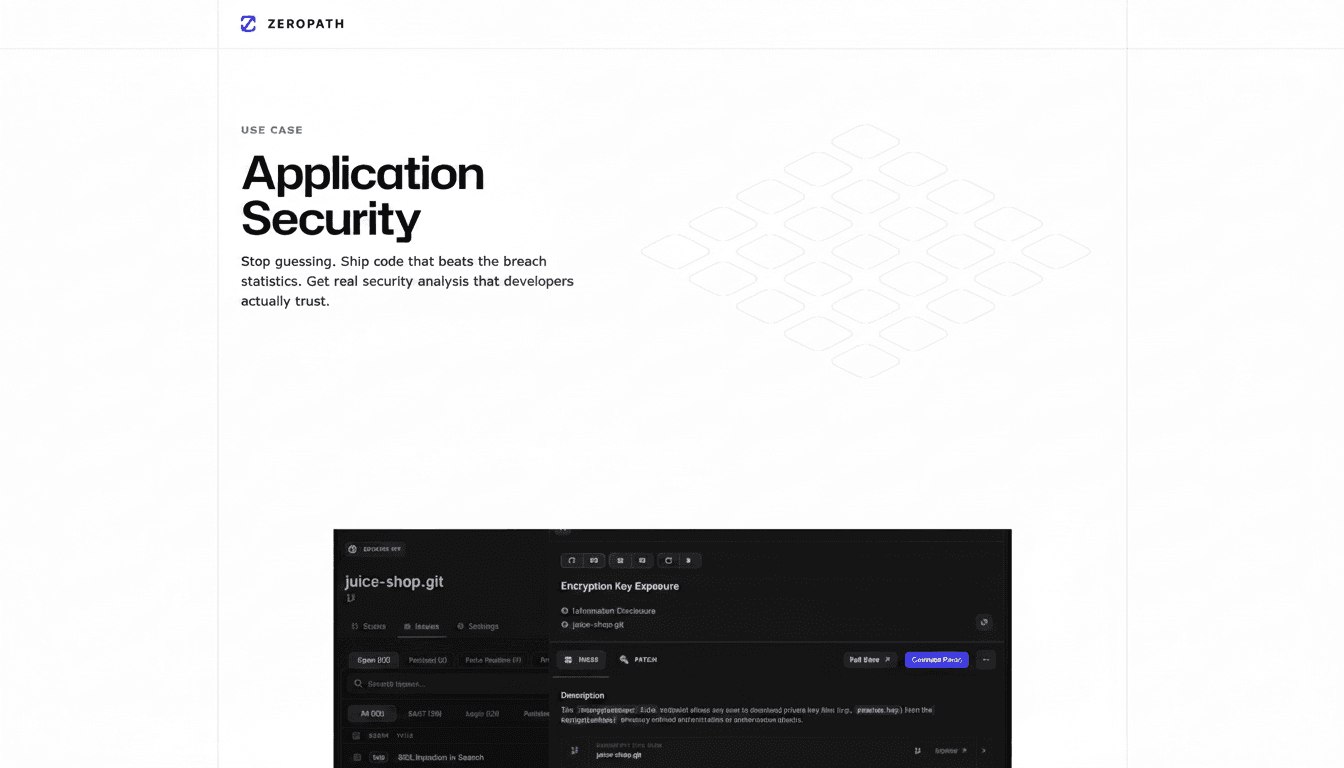
The tool goes beyond pull requests, integrating directly into GitHub and GitLab workflows to cover the full pipeline. It supports 15+ languages and frameworks, handles secrets scanning with a multi-engine approach, and includes IaC security and SCA for dependency vulnerabilities. Compliance teams can map automated evidence collection to SOC 2, ISO 27001, PCI DSS, and NIST without requiring a separate GRC tool.
- AI agents trace data flow from source to sink and confirm whether each finding is reachable and exploitable in context before surfacing it, cutting the noise that causes security teams to ignore alerts entirely.
- Data flow tracing catches multi-file and multi-step vulnerabilities that rule-based scanners and pattern-matching tools miss.
- Auto-generated fix PRs are mergeable immediately, not vague remediation suggestions requiring rework.
- Full pipeline and repository scanning beyond PR-level analysis gives continuous coverage between code reviews.
- Language coverage includes Rust, Dart, Nim, and AL (Business Central), which DryRunSecurity doesn't support, making it a practical fit for polyglot stacks beyond the mainstream.
It's good for engineering and security teams in polyglot environments who need verified, actionable findings with auto-generated fixes, especially for orgs burned by alert fatigue from legacy SAST tools, or for those who need compliance evidence alongside vulnerability detection.
ZeroPath is built for depth and accuracy over configurability. Teams write security policies in plain language, scoped to org, tag, or repository, and AI agents trace actual data flow across the full codebase to confirm whether a finding is exploitable in context. That's a different model than DryRunSecurity's Natural Language Code Policies, which run plain-English rules as pattern checks at PR time. It's also different from Semgrep's rule engine, where teams author detection logic directly in regex or AST syntax. ZeroPath doesn't expose that layer by design: the policy defines what to look for, and the AI handles verification across the full codebase. Teams that want to own every detection pattern at a low level will find this trade-off real. Teams burned by alert fatigue from hand-maintained rulesets will find it a relief.
If DryRunSecurity's PR explanation layer isn't enough for your team's security posture, ZeroPath closes the gap. It cuts false positives by 75%, catches business logic vulnerabilities that pattern-matching tools miss entirely, and ships fixes. See ZeroPath in action with a quick walkthrough of your codebase.
Checkmarx
Checkmarx is one of the older names in application security, built for enterprise scale across 35+ languages and frameworks. The tool unifies SAST, SCA, DAST, container scanning, and IaC analysis into a single product. Their CI/CD and IDE integrations are mature and configurable on a per-project or per-team basis, covering everything from API security to compliance reporting for SOC 2, ISO 27001, and PCI DSS. Code fix recommendations come bundled with findings, though the quality varies. Some are actionable, others require substantial engineering work to implement safely.
It's good for large enterprises with complex, multi-language environments that need broad AppSec coverage and compliance reporting baked in.
Licensing costs are high, scans on larger repositories can run over 10 minutes, and the volume of false positives is high enough that teams often struggle to act on findings without heavy triage overhead. Many shops end up with dedicated personnel just managing Checkmarx alert queues.
Checkmarx covers a lot of ground, but the noise and cost add up. Security teams running large Checkmarx deployments routinely report that triage overhead, not detection coverage, becomes the limiting factor: alert queues grow faster than engineers can act on them. ZeroPath produces high-quality findings with 75% fewer false positives and catches business-logic vulnerabilities that Checkmarx's pattern-matching misses.
Snyk
Snyk is a developer-first security tool that finds and fixes vulnerabilities in open-source dependencies, containers, IaC, and application code. The tool sits squarely in the developer workflow (IDE plugins, CLI, and direct SCM integrations), so security feedback arrives without requiring engineers to leave their existing tooling. It supports GitHub, GitLab, Bitbucket, and Azure DevOps, covers 17+ languages, and includes container and IaC scanning on paid tiers. Dependency vulnerability detection for SCA coverage is mature. The fix PRs it generates for known CVEs are reliable, and the licensing compliance features matter to legal and procurement teams.
It's good for teams whose primary risk surface is open-source dependencies and container images, especially orgs already invested in developer-centric tooling that want SCA with minimal friction. Pricing stands at $25/dev/month on the Team tier (per current published pricing, capped at 10 developers).
SAST coverage is secondary to SCA and produces a high false-positive rate without tuning. Business logic vulnerabilities and multi-step code flaws fall outside Snyk's detection model. Snyk is built for known, cataloged vulnerability patterns instead of novel code-level logic errors.
Snyk handles dependencies well, but it won't catch the application-layer vulnerabilities that live in your own code. ZeroPath's AI agent traces data flow through custom code and verifies exploitability, covering the class of flaws Snyk's pattern-based SAST consistently misses.
Semgrep
Semgrep is a static analysis engine built around a large, community-maintained ruleset. The Free Edition is self-hosted and includes both SAST and SCA at no cost, making it attractive to teams that want open-source flexibility and are willing to invest engineering time in rule curation. The Teams tier at $30/dev/month (per product, per contributor; current published pricing) adds secrets scanning, SSO, and managed rules. It supports 30+ languages and integrates with GitHub, GitLab, Bitbucket, and Azure DevOps. The open-source rule syntax is approachable enough that security engineers can write custom rules without deep knowledge of the compiler.
It's good for security teams with engineering capacity to maintain custom rules, for orgs that need a free, self-hosted SAST option, or for teams that want to codify their own security standards in a rule engine.
Detection quality is bounded by ruleset coverage. Out-of-the-box false-positive rates vary across rule categories, and business-logic vulnerabilities that don't match an existing pattern go undetected. Running Semgrep effectively requires ongoing rule maintenance, which adds internal overhead that is often deprioritized.
Semgrep gives you a powerful rule engine, but the value you get out is proportional to the rules you put in. ZeroPath's AI-native approach finds vulnerabilities no predefined rule would ever catch, and does it without requiring a team of engineers to maintain detection logic.
Feature Comparison: DryRunSecurity vs Top Alternatives
Feature | DryRunSecurity | ZeroPath | Checkmarx | Snyk | Semgrep |
|---|---|---|---|---|---|
Languages Supported | 14 | 15+ | 35+ | 17+ | 35+ |
VCS Integration | GitHub, GitLab | GitHub, GitLab, Bitbucket (Cloud & Data Center) | GitHub, GitLab, Bitbucket, Azure DevOps | GitHub, GitLab, Bitbucket, Azure DevOps | GitHub, GitLab, Bitbucket, Azure DevOps |
SAST | Yes (PR-focused) | Yes (full pipeline + PR) | Yes | Yes | Yes |
SCA | Yes (DeepScan) | Yes | Yes | Yes | Yes |
IaC Security | Yes (Terraform, PR-focused) | Yes | Yes | Yes | Yes (Terraform via SAST) |
Business Logic Detection | Limited | Yes (AI-native) | No | No | Limited |
Auto-Fix Generation | Yes (inline suggestions) | Yes | Limited | Yes | No |
False Positive Rate | 70% noise reduction (self-reported) | 75% reduction | 30-50% without tuning | Lower than traditional SAST (no verified benchmark) | Varies by ruleset |
Compliance Automation | Yes (SOC 2, ISO 27001, PCI, HIPAA) | Yes (SOC 2, ISO 27001, PCI DSS, NIST) | Yes | Limited | No |
Pricing | Free tier available | Custom | Custom | $25/dev/month | Free (CE) / $30/dev/month (Teams) |
Why ZeroPath Is the Best DryRunSecurity Alternative
DryRunSecurity gives developers more context inside PR reviews. That's useful when a team lacks AppSec expertise and wants a lightweight signal on every code change. But context is not action.
When your security posture depends on verified findings, automated remediation, and coverage that extends beyond pull request comments, the gap between explanation and resolution becomes a real workflow problem. DryRunSecurity's language support, GitHub/GitLab-only VCS support, and PR-focused scanning scope mean you're covering only a fraction of your actual attack surface.
ZeroPath closes those gaps without adding the overhead of stitching together multiple tools:
- Rust, Dart, Nim, and AL (Business Central) (production languages DryRunSecurity skips) are covered. For polyglot stacks that rely on any of those, DryRunSecurity leaves a blind spot that ZeroPath closes.
- Coverage extends past PR events. Full repository scanning runs continuously, catching vulnerabilities that never touch an active pull request.
- SCA, IaC, and secrets scanning are built in. No separate tools, no additional dashboards, no manual correlation across outputs.
- Findings arrive already verified. The AI agent confirms exploitability before surfacing an issue, not after your team has spent time triaging noise.
The tool fits security and engineering leaders who've hit the ceiling on what PR-level explanation tools can do and need verified findings, fix automation, and compliance evidence without adding more vendors.
The one trade-off worth naming: ZeroPath is not a rule engine. Teams that want to own every detection pattern at the regex or AST level won't find that here. What they get instead is natural-language policy definitions analyzed by AI agents across the full codebase for broader coverage and less manual maintenance.
Bottom Line: DryRunSecurity's value is in the explanation layer. ZeroPath is in the action layer: finding vulnerabilities, confirming they're real, and shipping the fix. If your team has outgrown contextual PR comments, ZeroPath is worth a serious look. It cuts false positives by 75% and catches business logic vulnerabilities that pattern-matching tools miss entirely.
Final Thoughts on Picking the Right Alternative
The move from DryRunSecurity to a more complete solution usually happens when teams realize they need more than just contextual explanations. They need verified vulnerabilities, auto-generated fixes, and coverage that extends beyond DryRunSecurity's 14-language list and PR comments. DryRunSecurity alternatives like ZeroPath cut false positives by 75% and catch business logic flaws that pattern-matching tools miss entirely. See it in action with a quick walkthrough of your codebase.
FAQ
When should you consider moving away from DryRunSecurity?
Consider alternatives if you're running languages beyond DryRunSecurity's language support, need full repository scans outside PRs, or need automated PR creation for fixes instead of inline suggestions. Also worth assessing if you're on Bitbucket or managing multi-VCS environments.
What features should you look for when comparing SAST alternatives?
Focus on false-positive rates (can your team act on findings, or will they ignore alerts?), language coverage that matches your actual stack, and whether the tool verifies exploitability instead of pattern-matching. Auto-fix generation and compliance reporting matter if you're scaling AppSec or prepping for audits.
How does AI-powered verification differ from traditional SAST pattern matching?
Traditional SAST flags potential vulnerabilities based on code patterns without confirming exploitability, leading to a high false-positive rate. AI-powered verification traces actual data flow through your codebase to confirm whether a vulnerability is reachable and exploitable in context, surfacing only actionable findings.
Can I get compliance reporting from PR-focused security tools?
Most PR-focused tools don't generate audit-ready compliance evidence because they only analyze code changes, not full repository state. For SOC 2, ISO 27001, or PCI DSS requirements, you need continuous full-repository scanning with evidence collection tied to specific control frameworks.
What's the practical difference between auto-fix suggestions and auto-fix generation?
Suggestions provide remediation guidance requiring developers to manually implement fixes. Generation produces actual code patches or PRs that can be reviewed and merged directly, the difference between "here's what to do" and "here's the working fix ready to deploy."