Most business-logic flaws don't look like vulnerabilities to traditional SAST tools because there's no suspicious syntax to flag. AI SAST tools claim to go beyond traditional pattern matching to identify authorization bypasses, using semantic reasoning to understand code intent and detect complex business logic flaws. Which tools can actually find these flaws, and which are just running legacy scanners with an LLM wrapper to reduce noise?
TLDR:
- Traditional SAST (Static Application Security Testing) tools miss business logic flaws because they match patterns, not code intent
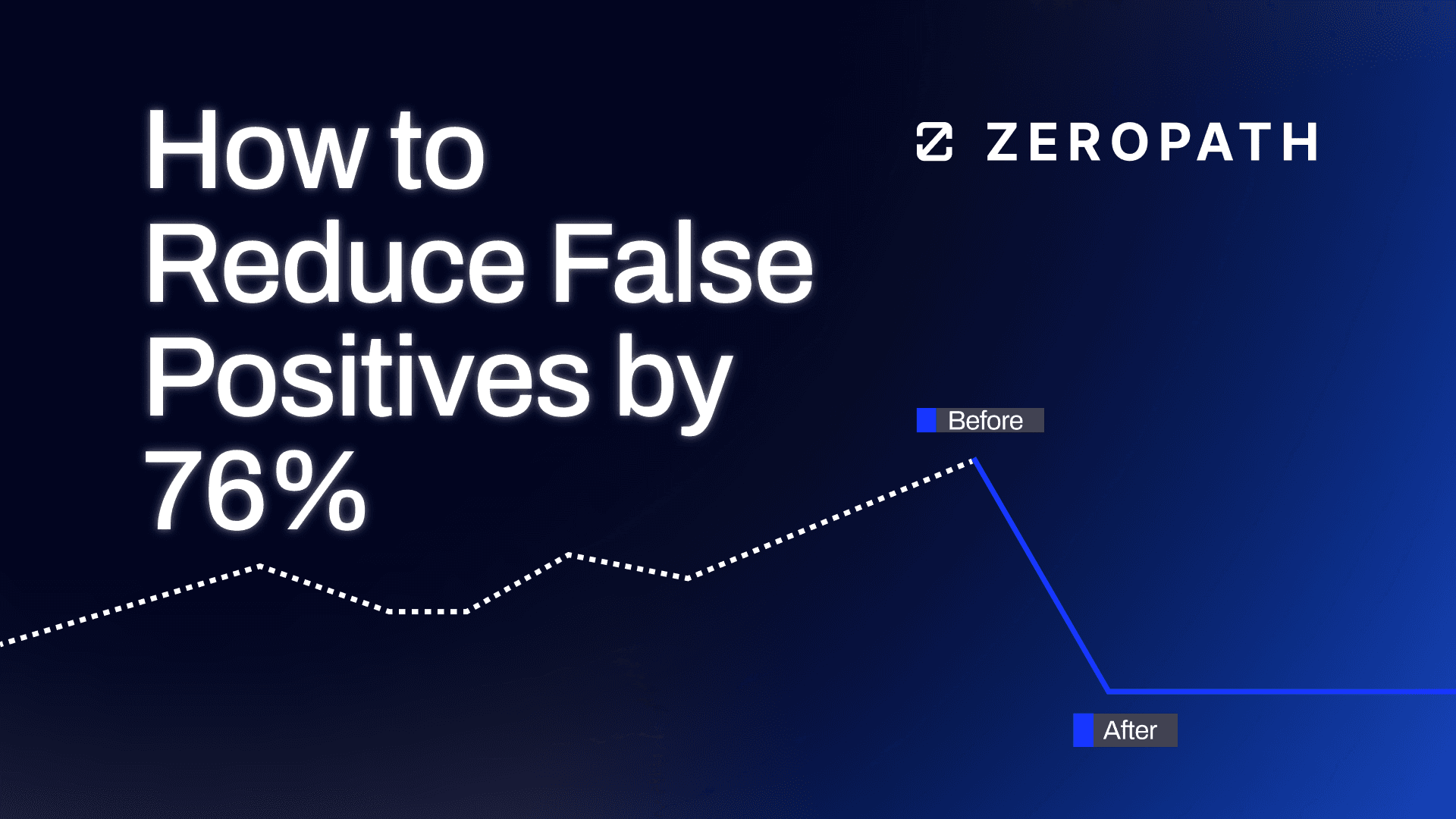
- ZeroPath detects authentication bypasses and IDORs with 75% fewer false positives via multi-stage AI validation
- ZeroPath PR scans finish in under one minute across SAST, SCA, secrets, and IaC running in parallel
- Pattern-based tools like Semgrep and CodeQL cannot find vulnerabilities they haven't seen before
- ZeroPath is an AI-native application security tool that finds and auto-fixes business logic vulnerabilities
What Are AI SAST Tools for Business Logic Flaws
Business logic vulnerabilities don't look like SQL injection. An authentication bypass that skips a permission check, an IDOR that exposes another user's data, a race condition that corrupts account state: none of these trigger a regex rule. They require understanding what the code is supposed to do.
AI SAST tools take a different approach. Instead of matching patterns, they build a software property graph of your application's data and control flows, then test whether your business rules hold under adversarial conditions. The strongest tools also include environment context: they understand which endpoints are internet-exposed, how identity providers gate access, and where cloud boundaries sit. A logic flaw hidden behind an internal mTLS gateway is a vastly different risk than one exposed on a public API.
Reachability analysis is what separates validated findings from noise. Instead of only flagging a suspicious flow without confirming exploitability, these tools confirm whether a path from a real public entry point (the source) reaches the vulnerable logic (the sink). If the sink is unreachable, the finding doesn't get recorded. Two approaches exist, and they are not equivalent:
- Augmented SAST: Bolts an LLM onto a legacy scanner to filter noise and explain complex results.
- AI-Native SAST: Rebuilds the pipeline around reachability and semantic reasoning. These tools confirm whether a path from a real public entry point reaches the vulnerable logic, validate findings for actual exploitability, and include environment context to understand which endpoints are exposed and where cloud boundaries sit.
How We Ranked AI SAST Tools for Business Logic Detection
Standard SAST benchmarks measure detection volume against known vulnerability signatures, which tells you little about whether a tool can find business logic flaws. Those flaws have no signature to match. Raw vulnerability counts tell you little when half the findings are noise.
These are the criteria that actually matter for business logic detection:
- Detection accuracy for business logic flaws: authentication bypass, IDOR, broken access control, race conditions, and privilege escalation
- False positive rates, since a tool that flags everything gets ignored in practice
- PR scan speed, because a 20-minute check blocks shipping
- Auto-remediation quality: whether patches are actually correct, beyond merely existing
- Multi-VCS support across GitHub, GitLab, and Bitbucket
- Compliance mapping to SOC 2, PCI DSS, and ISO 27001
Each criterion is assessed against vendor documentation, independent security research, and verified CVE discoveries in production codebases. These are exactly the cases where pattern-matching tools fall short.
Best Overall AI SAST Tool for Business Logic Flaws: ZeroPath
ZeroPath is an AI-native application security tool trusted by 750+ companies, running 125,000+ code scans monthly. A multi-stage pipeline validates exploitability at every step before a finding reaches your queue, which is what makes it the strongest option for detecting business logic flaws. Pricing starts at $1,000/month plus $60/developer, with a 14-day free trial and Enterprise pricing available upon request.
What ZeroPath Offers
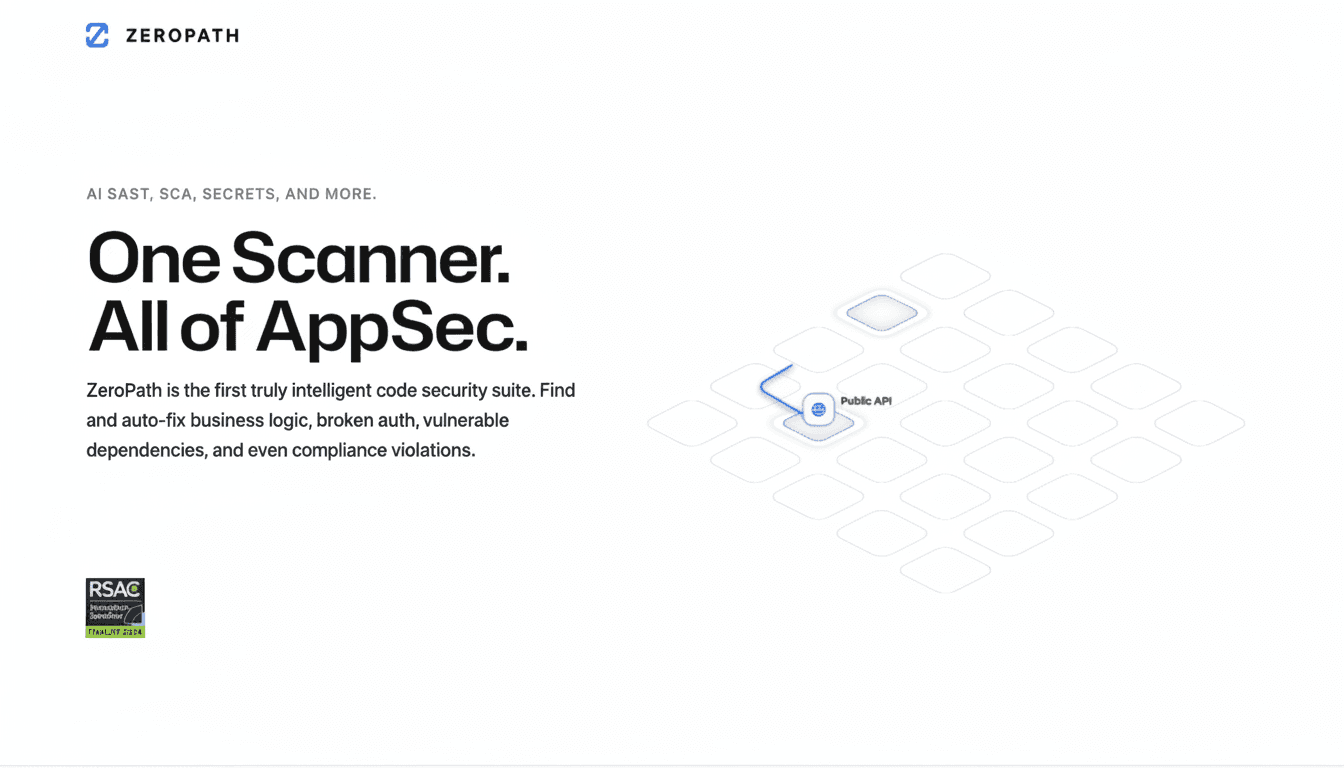
- AI-native SAST that detects and auto-fixes business logic flaws, broken auth, IDOR, race conditions, and vulnerable dependencies across 15+ languages
- Found critical zero-days, including RCE, authentication bypasses, and IDORs in projects owned by Netflix, Salesforce, and Hulu
- PR scans complete in under one minute with SAST, SCA, secrets, and IaC running in parallel
- Uncovered 170 verified issues in curl, with maintainer Daniel Stenberg praising the finding quality
Core Strengths
Zeropath's AI validation runs at multiple stages, including a secondary pass that filters non-exploitable results before they're ever recorded. Compared to traditional pattern-matching SAST on the same codebases, that pipeline surfaces 2x more real vulnerabilities and cuts false positives by 75%.
During Aptos Labs' evaluation, ZeroPath surfaced a replay vulnerability in a vendor library that no existing Semgrep rule covered, and one that the pattern-matching architecture could not express.
Compliance mapping to SOC 2, PCI DSS 4.0, ISO 27001, and NIST 800-53 is built in. Auto-generated patches, fix verification, and CI/CD integration round out the package.
ZeroPath found issues that looked like something a person spent real time uncovering.
CodeAnt AI
CodeAnt AI markets itself as a Code Health solution, combining code quality and security scanning in a single product. It covers SAST, SCA, secrets detection, and IaC checks, with AI-powered PR reviews that explain findings in plain language. Pricing starts at $24/user/month (billed monthly), with an Enterprise tier at custom pricing.
What CodeAnt AI Offers
- SAST, SCA, secrets, and IaC scanning bundled into one product, reducing vendor sprawl for smaller teams
- AI PR reviews with plain language explanations of findings
- AI CodeFix layer provides LLM-suggested one-click remediation for detected findings
- Covers Python, TypeScript, and other common languages with AI-powered detection across SAST, SCA, secrets, and IaC categories
Good for: Security leaders at small to mid-sized organizations (5-100 developers) wanting bundled code quality and security in one place.
Limitation: Advanced RBAC, compliance dashboards, and API support feel underdeveloped for larger, compliance-heavy organizations. Custom rules and reporting depth lag behind enterprise-grade tools.
Sonar
Sonar (SonarQube) started as a code quality tool and expanded into security territory, adding SCA and secrets detection alongside traditional SAST capabilities. The core product stays focused on code health: technical debt tracking, code smells, coverage trends, and monorepo support.
What Sonar Offers
- Pattern-based security scanning for known vulnerability signatures
- Code quality metrics, including technical debt and coverage tracking
- Historical trend tracking with monorepo support
Good for: Teams already standardized on SonarQube for code quality who want to consolidate scanning without switching tools.
Limitation: Pattern matching leaves business logic flaws, authentication bypasses, and authorization issues effectively invisible. Pricing scales by lines of code, which gets unpredictable fast as codebases grow.
GitHub Advanced Security
GitHub Advanced Security (GHAS) bundles CodeQL SAST, Copilot Autofix, Dependabot, and security campaigns into GitHub's native interface. CodeQL builds a relational semantic database of your code and runs query-based analysis against it. It's effective for vulnerability classes for which someone has already written a query.
What GitHub Advanced Security Offers
- CodeQL semantic analysis with query-based vulnerability detection
- Copilot Autofix for AI-generated remediation suggestions
- Native GitHub Security tab with inline PR checks
Good for: GitHub-only organizations that want native security scanning without adding a vendor. Note that per-committer pricing scales quickly with team size.
Limitation: The query model is also its ceiling. If no one wrote a query for a vulnerability type, CodeQL won't find it. Business logic flaws, authentication bypasses, and IDOR issues fall squarely into that gap. GitLab and Bitbucket repositories get no coverage at all.
Checkmarx
Checkmarx has been a Gartner Magic Quadrant Leader for years, and Checkmarx One is their flagship enterprise offering. The breadth is real: SAST, DAST, SCA, API security, container scanning, IaC, plus ASPM for centralized risk visibility and Codebashing for developer training.
Good for: Large enterprises with dedicated AppSec teams and months to spend on implementation.
Limitation: Enterprise contracts typically range from $25,000 to $110,000+ annually, with a median of around $54,000/year, according to Vendr procurement data. Full scans can run substantially longer than PR gates allow, making them impractical for many teams.
Semgrep
Semgrep's rule engine is designed for teams that want tight control over what gets flagged. The Pro Engine adds cross-file and cross-function taint analysis, which closes a real gap in the community edition.
What Semgrep Offers
- Fast scanning with an average CI scan time of 10 seconds across 35+ languages (per Semgrep)
- Large community-contributed rule registry plus custom rule authoring in pattern-matching syntax
- Three separate products (Code, Supply Chain, Secrets): Teams plan starts at $30/contributor/month for Code, with Secrets at $15/contributor/month on top; Enterprise is custom-priced
Good for: Security teams with engineers who want complete control over custom rules and are willing to invest ongoing time in maintenance and tuning.
Limitation: Semgrep CE scored an F1 of 36.70% on the OpenSSF CVE Benchmark, well below the benchmark average for AI-native tools. The rule-based architecture is also its hard ceiling: business-logic flaws and authentication bypasses require understanding the code's intent, not matching patterns. No rule exists for a vulnerability your scanner has never seen. At scale, customers consistently report high false positive rates: rules accumulate, noise builds, and developers learn to ignore alerts.
Feature Comparison Table of AI SAST Tools for Business Logic Detection
The table below captures how each tool stacks up across the criteria that matter most for business logic detection.
Feature | ZeroPath | CodeAnt AI | Sonar | GitHub Advanced Security | Checkmarx | Semgrep |
|---|---|---|---|---|---|---|
Business logic detection | Yes | No | No | No | No | No |
Authentication bypass detection | Yes | No | No | No | No | No |
False positive rate | Very low (75% fewer than traditional tools) | Moderate | High (based on real-world production codebases) | High | High | High |
Auto-remediation | Validated PRs | AI fix suggestions | No | Copilot suggestions | Guidance only | No |
Multi-VCS support | Yes | Yes | Yes | GitHub, Azure DevOps | Yes | Yes |
AI-native architecture | Yes | Partial | No | No | No | Partial (rules-based + AI triage layer) |
Compliance mapping | SOC 2, PCI-DSS, ISO 27001, NIST | Limited | Limited | Limited | Yes | Limited |
Setup time | 5 minutes | Fast | Medium | Fast | Months | Medium |
Pricing model | Per developer | Per user | Per LOC | Per committer | Opaque enterprise | Per contributor |
Business logic detection and authentication bypass detection are the two columns where only one tool has a checkmark. Speed and false positive rates vary, but those gaps close with tuning. The detection gap does not.
Why ZeroPath Is the Best AI SAST Tool for Business Logic Flaws
Broken access control tops the OWASP Top 10, appearing in up to 55.97% of applications tested: IDORs, authorization bypasses, and business logic flaws that pattern-matching tools are structurally blind to. No regex rule can confirm whether a permission check actually runs before data is returned.
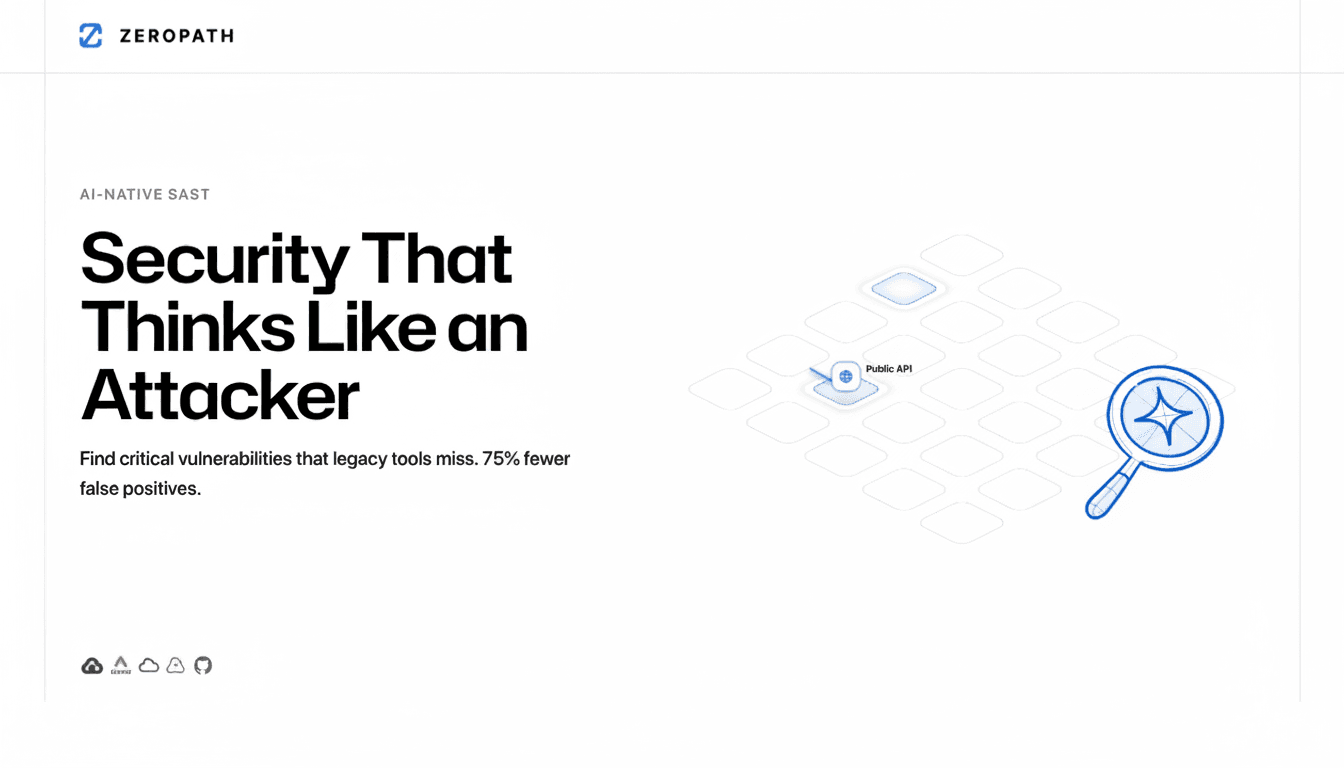
ZeroPath's architecture reasons about code intent. The pipeline traces authentication flows, maps authorization logic across services, and validates whether business rules hold under adversarial conditions before anything hits your queue.
The practical numbers hold up too. PR scans that finish in under one minute mean security fits within the development cycle without blocking it.
For security leaders assessing tools against SOC 2, PCI-DSS 4.0, or ISO 27001 requirements, ZeroPath maps every finding to the corresponding control clauses and automatically generates continuous audit evidence. No manual evidence collection before the next audit cycle.
If business-logic flaws and authentication vulnerabilities are in your threat model, ZeroPath is the only tool here designed to find them.
Final Thoughts on AI SAST for Authentication Bypass Detection
Authentication bypass detection requires reasoning about code intent across authentication flows and authorization logic, which is exactly where pattern-based tools hit their ceiling. ZeroPath's multi-stage validation pipeline filters non-exploitable results before they reach your queue, which is why teams see 75% fewer false positives. The deeper semantic analysis of authentication flows and authorization logic reveals 2x more real vulnerabilities than pattern-matching tools. Book a demo to run it against your actual codebase. A scanner your team ignores has zero detection value regardless of what it claims to find.
FAQ
How do I choose the right AI SAST tool to detect business logic vulnerabilities?
Start by testing whether the tool can detect business-logic flaws in your codebase: authentication bypasses, broken access control, and race conditions, beyond traditional pattern-matched vulnerabilities. Run a trial scan and measure false positive rates against PR scan speed; a tool that takes 30 minutes per PR or floods your queue with noise won't survive contact with your team. For compliance-heavy environments, verify built-in compliance mapping to your specific frameworks before committing.
Which AI SAST tool works best for teams without dedicated AppSec engineers?
ZeroPath and CodeAnt AI both offer fast setup and AI-validated findings that reduce triage burden, making them viable for developer-led security. ZeroPath handles business-logic detection and auto-remediation without manual rule tuning, while CodeAnt AI bundles code quality and security for smaller teams seeking consolidated tooling. Avoid Checkmarx and Semgrep unless you have security engineers available to spend weeks on implementation and ongoing rule maintenance.
Can pattern-matching SAST tools like Semgrep detect authentication bypass vulnerabilities?
No. Pattern-matching tools, including Semgrep, SonarQube, and CodeQL, are structurally limited to known vulnerability signatures: they match syntax, not intent. Authentication bypasses, IDOR issues, and authorization logic flaws require understanding what your code is supposed to do under adversarial conditions, which demands semantic analysis instead of regex matching. Semgrep CE scored 36.70% F1 on the OpenSSF CVE Benchmark precisely because of this architectural ceiling.
What's the difference between AI-native SAST and traditional tools with AI features bolted on?
AI-native tools like ZeroPath run AI validation at multiple pipeline stages, including a secondary pass that filters non-exploitable results before findings reach your queue. Traditional tools with AI features typically use LLMs only for noise reduction or patch suggestions on top of the same pattern-matching engine, so they still miss business-logic flaws entirely. The practical difference: 75% fewer false positives and 2x more real vulnerabilities found versus marginal improvements to legacy scanning.
When should I consider switching from GitHub Advanced Security to a dedicated AI SAST tool?
If your threat model includes business-logic vulnerabilities, authentication bypasses, or IDOR issues (and, per OWASP, these now account for half of all high and critical findings), CodeQL's query-based model won't cover them. Switch if you're running GitLab or Bitbucket repositories that GHAS doesn't support, or if CodeQL's scan times make PR checks impractical for your team's shipping velocity.